Mentoring and Curriculum
The ACE Mentor Program introduces high school students to careers in architecture, engineering, construction, and the skilled trades through hands-on, project-based experiences. Volunteer industry professionals play a central role by sharing their knowledge, guiding students through the design and construction process, and helping them understand the many career pathways available within the industry.
Effective mentoring goes beyond sharing technical expertise. Strong mentors build relationships, encourage participation, connect learning to real-world practice, and create an environment where students feel supported and engaged. The resources below provide guidance for creating meaningful and effective mentoring experiences.

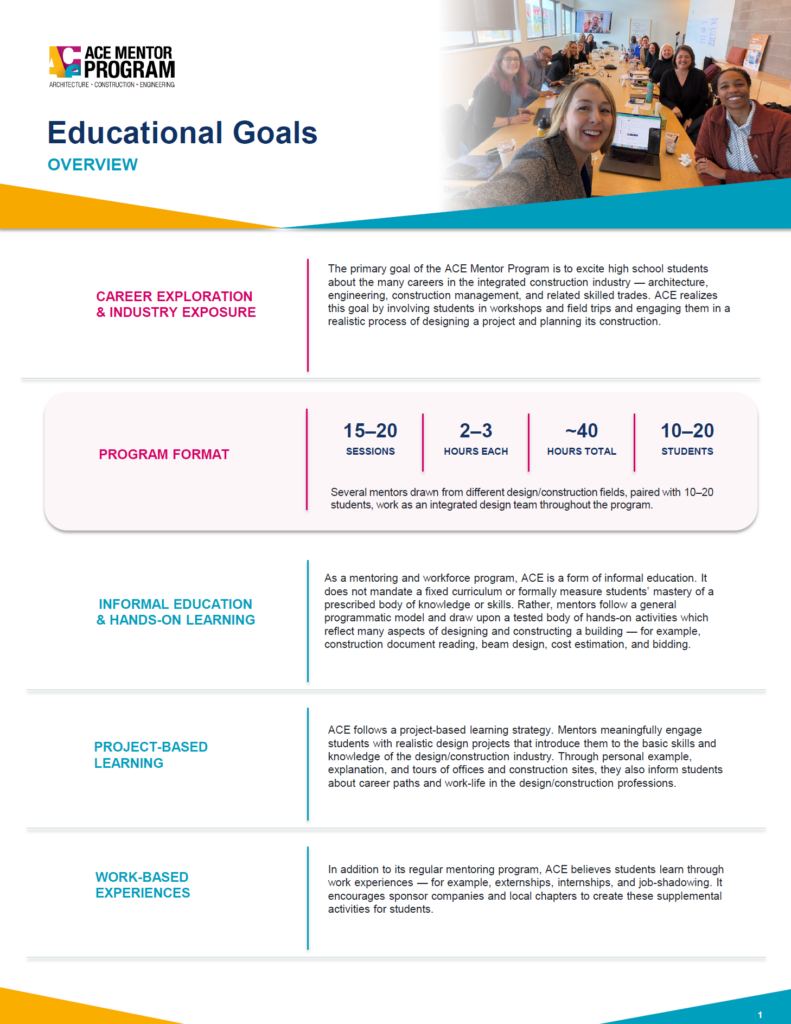
ACE uses project-based, experiential learning to help students explore careers in architecture, construction, engineering, and the skilled trades. Through hands-on projects, mentorship, workplace and construction site visits, students build industry knowledge while developing skills in problem-solving, collaboration, communication, and critical thinking. Use the downloadable Educational Goals + Learning Objectives as a guide when planning and delivering your affiliate’s program.
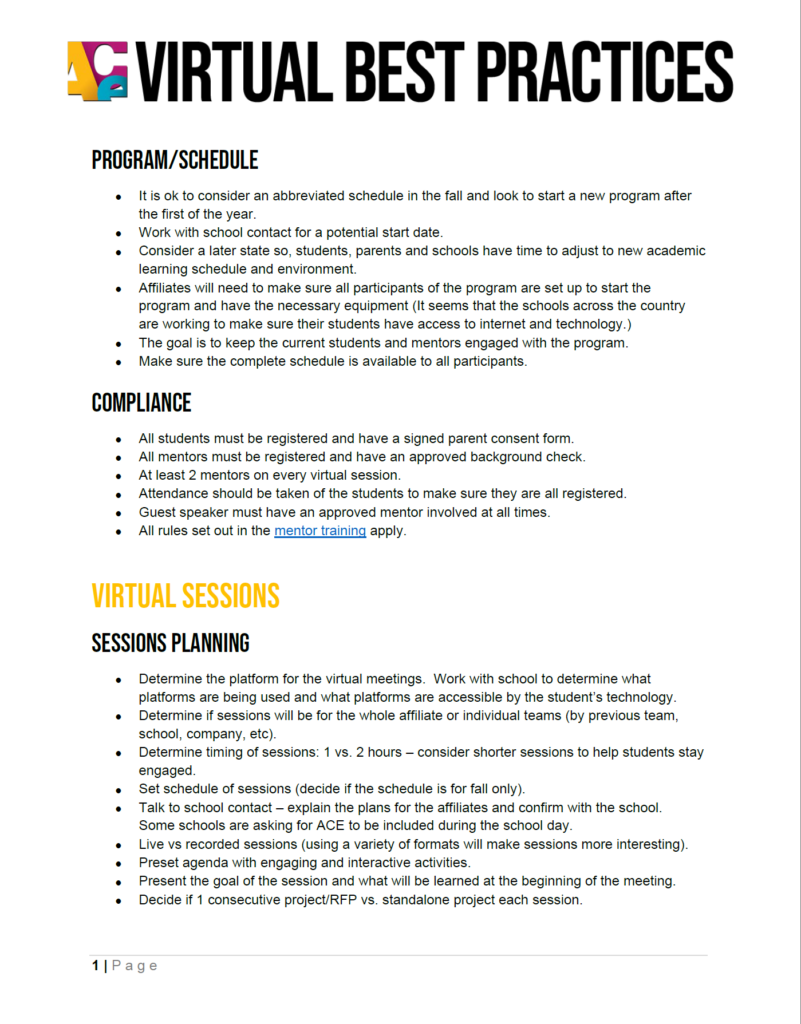
Create engaging and effective ACE mentoring experiences in a virtual environment. The Virtual Best Practices guide provides practical recommendations for planning schedules and sessions, maintaining program requirements, keeping students actively involved, organizing virtual projects and office hours, adapting curriculum, and recruiting students and mentors. Use the guide to help create virtual programming that remains interactive, organized, and connected to the ACE mentoring experience.
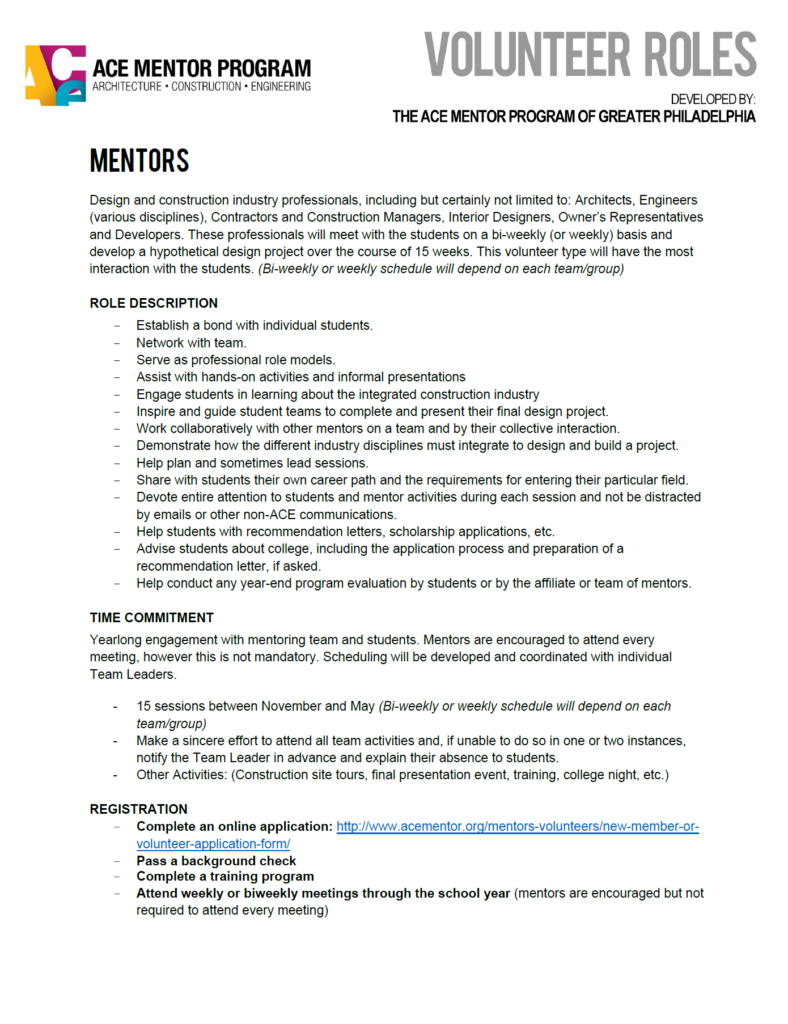
ACE volunteers play an essential role in creating meaningful experiences for students and supporting a successful program. Review the Volunteer Roles + Responsibilities guide to understand expectations for mentors and other volunteers, including student engagement, teamwork, professional conduct, program participation, time commitments, and registration requirements. Use this resource to help volunteers understand their role and prepare to make a positive impact on ACE students.